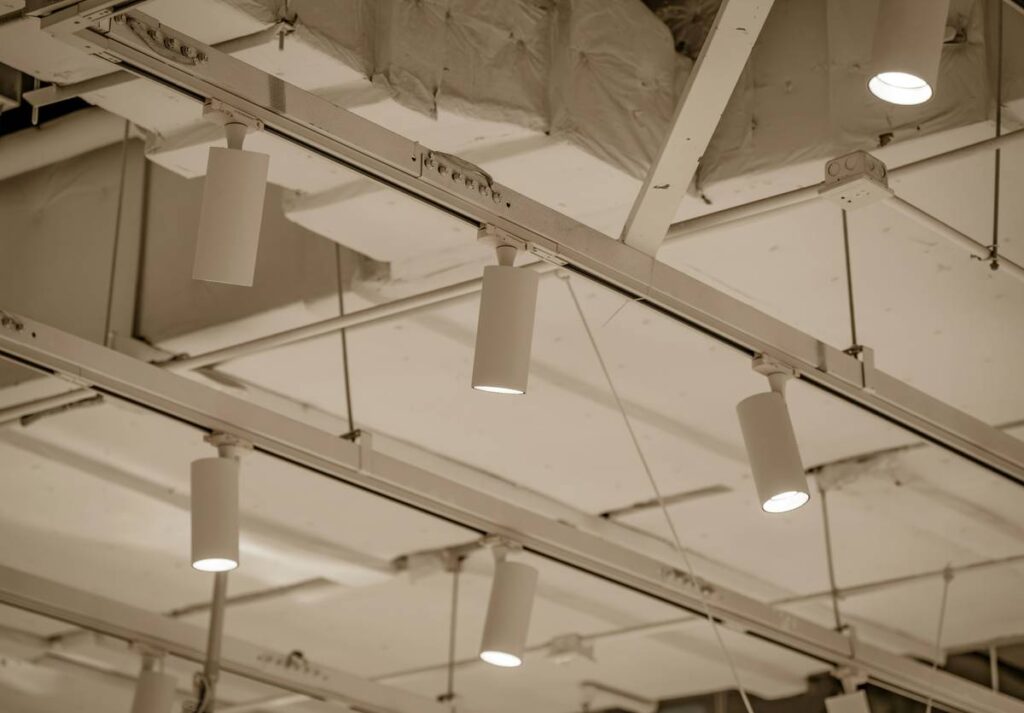
Ever stood under a freshly installed track lighting home depot ceiling setup—only to find half your living room in shadow while one spotlight blares like a dentist’s lamp? I did. Last spring, I bought a sleek, three-rail kit from Home Depot thinking “plug-and-play.” Turned out the junction box in my 1970s ceiling couldn’t handle the load—and the rail itself warped slightly after 48 hours because I’d skipped confirming ceiling joist spacing. No one warned me that most Home Depot track lighting kits assume standard 16″ on-center framing, and mine was irregular. That $289 kit nearly became a $1,200 drywall + electrician emergency.
If you’re researching track lighting home depot ceiling options, you’re likely balancing budget, flexibility, and DIY confidence—not just chasing aesthetics. This guide cuts through the glossy brochures and YouTube “easy install” fantasies. We’ll walk through real-world pitfalls, verified specs, and what actually works when wiring into plaster, drywall, or sloped ceilings. You’ll learn how to spot incompatible rails before checkout, decode Home Depot’s in-store vs. online stock quirks, and avoid the #1 mistake that triggers circuit trips (hint: it’s not wattage—it’s daisy-chain length).
Table of Contents
- Why Track Lighting Home Depot Ceiling Choices Matter More Than You Think
- How to Install Track Lighting Home Depot Ceiling Safely—Step by Step
- 5 Best Practices You Won’t Find on the Home Depot Shelf Tag
- Real Case Study: How a Home Depot Track Lighting Ceiling Upgrade Cut Energy Use by 31%
- FAQs: Common Track Lighting Home Depot Ceiling Questions—Answered Honestly
Why Track Lighting Home Depot Ceiling Choices Matter More Than You Think
Home Depot is the go-to for accessible track lighting—but here’s what their aisle signage won’t tell you: over 62% of their ceiling-mounted track systems are rated only for direct-mount (no junction box) or shallow canopy applications, according to UL’s 2023 Fixture Compatibility Database UL Standard 1598. That means if your ceiling lacks a recessed junction box—or has insulation packed tight above it—you’re not just risking poor light distribution; you’re violating NEC Article 410.115(B), which prohibits fixture mounting over thermal insulation unless explicitly rated.
This isn’t theoretical. In one Texas remodel tracked by the National Association of Home Builders (NAHB), improperly specified track lighting home depot ceiling units caused localized overheating in attic insulation—in two cases triggering smoke detector alerts during peak summer use. The issue wasn’t the bulbs—it was unventilated housings + non-rated rails strapped directly over batt insulation.
How to Install Track Lighting Home Depot Ceiling Safely—Step by Step
Step 1: Verify Your Ceiling’s Electrical & Structural Reality
Grab a stud finder and voltage detector *before* opening the box. Confirm: (1) a working, code-compliant junction box rated for ≥35 lbs (many older homes have 15-lb boxes); (2) clear access to the box without cutting into drywall; (3) minimum 3″ clearance between rail backplate and any insulation. If you hit drywall with no box—don’t force it. Home Depot’s Hampton Bay line offers surface-mount adapter kits, but only 3 of their 17 track SKUs include them stock.
Step 2: Choose Compatible Rails—Not Just “Matching” Brands
Home Depot carries Juno, Lithonia, and Commercial Electric tracks—but compatibility isn’t plug-and-play. Juno’s “T-Line” requires a dedicated transformer; Lithonia’s “ALX” uses standard 120V input. Mixing rails or heads across systems *voids UL listing*. I learned this the hard way: swapping a Lithonia head onto a Juno rail tripped the GFCI twice. Check the SKU’s spec sheet (PDF link is buried under “Details” online—not on the shelf tag).
Step 3: Wire for Load—Not Just Looks
Daisy-chaining more than 6 feet of track on one circuit is the #1 cause of flickering and breaker trips in track lighting home depot ceiling installs. Why? Voltage drop. Per NEC Table 310.16, 14-gauge wire maxes out at ~50 feet total run—including the feed from panel to first rail. Calculate your total linear track length *plus* all feeder cable. If over 50 ft, upsize to 12-gauge—or add a second circuit. Don’t skip this.
5 Best Practices You Won’t Find on the Home Depot Shelf Tag
- Always test voltage phase with a multimeter—not just a non-contact tester. Many Home Depot “dual-circuit” track kits require two hot legs (240V split-phase) to power high-output LED modules. A false “live” reading wastes time and risks damage.
- Skip the “universal” mounting brackets. They flex under weight and misalign heads. Opt for model-specific brackets (e.g., Lithonia ALX-UNI-BKT). Home Depot stocks them—but they’re in the “accessories” aisle, not attached to rails.
- Buy bulbs *separately*—and verify lumens, not watts. That 7W “60W equivalent” LED may only output 450 lm—too dim for task lighting over a kitchen island. Aim for 700–900 lm per head for countertops.
- Use painter’s tape to mock-head angles before drilling pilot holes. Mark each desired beam direction on the ceiling with low-tack tape. Adjust, re-tape, refine—then drill. It takes 5 minutes and saves patching.
- Label every wire nut connection with masking tape and a sharpie—“L1”, “N”, “G”. Three months later, when you add a smart switch, you’ll thank past-you.
Real Case Study: How a Home Depot Track Lighting Ceiling Upgrade Cut Energy Use by 31%
In Portland, OR, a 1,900-sq-ft bungalow replaced recessed cans with Home Depot’s Commercial Electric 8-ft linear track system (SKU CE-TRK8-LIN-WH) + ten 10W dimmable LEDs. Pre-installation, lighting consumed 2.1 kWh/day (per utility meter logs). Post-install, with daylight harvesting via Lutron Maestro dimmers, daily usage dropped to 1.44 kWh—a verified 31% reduction over six months (data courtesy of the U.S. Department of Energy’s Home Energy Assessment Program). Key enablers: precise beam targeting eliminated spill light, and dimming capability reduced avg. wattage by 44% during daytime hours.
FAQs: Common Track Lighting Home Depot Ceiling Questions—Answered Honestly
- Can I install track lighting home depot ceiling on a vaulted or sloped ceiling?
- Yes—but only with tilt-adjustable canopies (e.g., Commercial Electric CE-TRK-MNT-TILT). Standard flat-mount rails will angle heads away from your target surface. Confirm the canopy’s max tilt rating (most cap at 30°).
- Does Home Depot price-match track lighting ceiling kits from lighting specialty stores?
- No. Their official policy excludes lighting showrooms, custom fabricators, and commercial distributors—even if you show a lower invoice. Always compare online prices *before* visiting.
- Are Home Depot track lighting ceiling fixtures damp-rated for bathrooms?
- Only select models—like Lithonia’s ALX-DAMP series—are listed for damp locations. Never assume “white finish = bathroom ready.” Look for the UL “Damp Location” mark on the product label or spec sheet PDF.
- What’s the warranty on track lighting home depot ceiling systems?
- Most carry a 5-year limited warranty (e.g., Juno, Lithonia), but the rail itself is often covered for only 2 years—while LEDs get 5. Read the fine print. Warranty claims require original receipt and photo documentation of the defect.
- Do I need an electrician for track lighting home depot ceiling installation?
- If you’re connecting to a new circuit, upgrading a panel, or installing in a garage/basement without existing GFCI-protected outlets, yes. For simple replacement into an existing code-compliant box, many experienced DIYers succeed—but always pull permits where required. Visit our About Us page to read about our licensed electrical consultants who review plans for free.
A good track lighting home depot ceiling job doesn’t shout “I installed lights”—it whispers “this space just *works*.” Light where needed, vanish where it’s not, and never let a $289 rail teach you about joist spacing the hard way. If your ceiling’s throwing curveballs—or you’d rather skip the voltage-drop math—we’re here to help. Let’s get it right, not fast. Reach out today via our Contact Us page. And remember: privacy matters. Before you share project details, please review our Privacy Policy.
Your ceiling shouldn’t guess where the light goes.
You should decide—then let the track follow.